
The Gekko

Intro
In its fantasies of mechanical creatures, L’Epée 1839 turns to nature with The Gekko, a sculptural timepiece powered by an openworked skeleton movement and shaped after one of nature’s most surprising lizards.
From prehistoric forests to modern cities, gekkos have survived massive climate changes and continental shifts. Their small size, adaptability, and extraordinary physics helped them become one of the most successful groups of reptiles alive today.
Like the gekko itself, the Manufacture adapts to uncharted territories. Resilient, curious, and unafraid of technical or creative challenges, L’Epée 1839 continues to expand the horizons of clockmaking, transforming the quiet mystique of the gekko into mechanical life - where nature, symbolism, and time intertwine. Small, silent, and ever watchful, the gekko has long captured the human imagination. Across cultures - from Southeast Asia to the Mediterranean and the islands of Polynesia - it is seen as a guardian of the home, a symbol of renewal, adaptability, and quiet resilience.
The Story
Thanks to millions of microscopic hairs on its toe pads, the animal can grip even the smoothest surfaces, defying gravity with remarkable precision. Inspired by this natural agility, The Gekko by L'Epée 1839 can be mounted on a wall or placed on a table, allowing time to be read either as a wall clock or a table clock. Both timepiece and artistic object, The Gekko inhabits its surroundings like a living sculpture, bringing quiet mechanical life to the space it occupies.
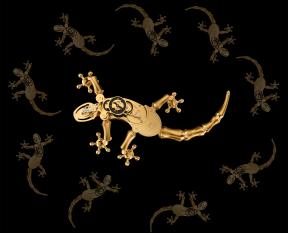
Once mounted on the wall, The Gekko reveals a new dimension of versatility. Thanks to its attachment system, the piece can be fixed in 11 different positions, allowing the creature to adopt a variety of orientations. Like a living gecko choosing its place on a surface, it can be arranged to climb, stretch, or rest—up, down, or sideways—each position offering a new perspective on the sculpture. In a clever extension of this adaptability, the dial features a rotating ring that can be adjusted to match the chosen orientation of the Gekko, repositioning the hour markers to ensure optimal legibility of time from any angle. In this way, the object adapts not only to its environment, but also to the vision of its owner.
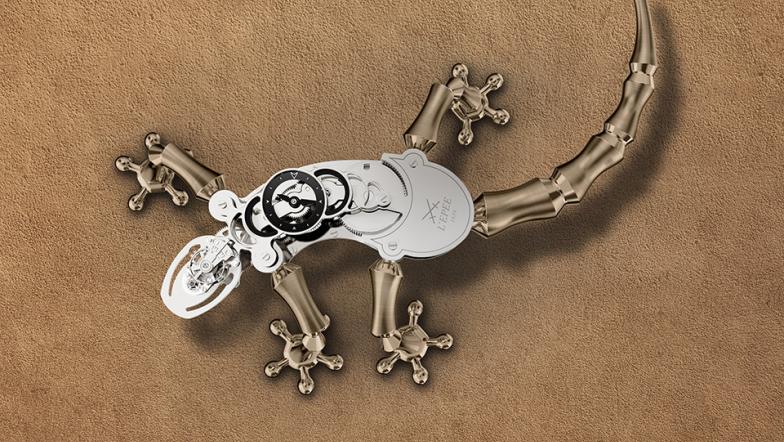
Time is displayed on an open dial set upon the creature’s back, where two hands indicate the hours and minutes. Extending beyond the central ring, a delicate metal structure unfolds across the dial, its openworked design evoking the organic texture of the gekko’s skin. Light flows freely through the airy architecture, giving the dial both depth and lightness while echoing the intricate patterns found on the lizard’s body. Integrated seamlessly into the sculpture, the dial feels like a natural extension of the creature itself.
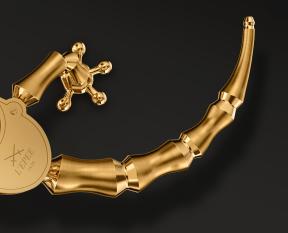
At the heart of the creation lies a playful and poetic feature: the clock is wound by shifting its tail from side to side. In nature, the gekko’s tail serves as both a reserve of energy and a means of survival—capable of detaching in moments of danger before eventually regenerating. Here, the tail becomes the source of the timepiece’s vitality. Winding it stores the energy that sets the movement in motion, powering the slow and steady passage of time. Time itself is set beneath the clock using a dedicated key. As the movement unwinds, the stored energy is gradually released—echoing the natural cycle of loss, renewal, and continuity.
The experience of winding and setting the time become more than simple mechanical actions; they form a quiet ritual through which the owner revives the creature, and connect with it.
As time often feels like calm moments punctuated by sudden leaps, marked by deadlines, special events, turning points, from our busy daily lives, the gekko often appears perfectly still, resting quietly against a wall—yet always ready to move.
This same philosophy lives within The Gekko by L’Epée 1839. The sculpture seems calm and composed, while inside an openworked movement reveals the intricate inner architecture of the mechanism. Like a living anatomy, the gears remain fully visible, bringing the creature’s mechanical life to the surface. At the head, the escapement - positioned like the gekko’s mind—sets the rhythm of time, echoing the animal’s quiet vigilance.
Great care has been devoted to the finishing of the creature’s body, legs, and tail, each element meticulously crafted and finished by hand. In-house techniques such as anglage, mirror polishing, satin finishing, circular satin finishing, sand-blasting, and polishing bring depth and contrast to the surfaces. By playing with light across every curve and facet, the finishes reveal the sculptural character of the piece, allowing reflections and shadows to animate the gekko’s form—much like light gliding across the skin of that fascinating living animal.
Any questions ?Contact us

Insight
With The Gekko, L’Epée 1839 honours this fascinating animal that scientists have been studying for many different purposes, from biology and evolution to materials science and robotics. the gekko unlocks secrets of nature’s engineering, inspiring innovations and next generation technologies.
Across cultures, the gekko carries a rich symbolic presence. In many parts of Asia, it is seen as a guardian of the home and a bringer of good fortune, its quiet presence on walls a sign of protection and harmony. In Mediterranean regions such as Spain, the small lizard is a familiar companion of warm evenings, admired for its resilience and ability to endure the passing seasons. Across the Pacific islands and parts of Africa, gekkos are also linked to ancestral spirits, renewal, and adaptability. Much like time itself, the creature is discreet yet ever present—quietly observing, enduring, and renewing. Its ability to regenerate its tail, to observe patiently before striking, and to move seamlessly between surfaces has made it an enduring symbol of survival, awareness, and transformation.
Through the vision of designer Marie Siebenborn, L’Epée 1839 transforms this humble companion into a refined horological object—both whimsical and sculptural, yet deeply symbolic. Perched on a wall or resting on a table, the creature becomes a silent guardian of time, observing the rhythms of daily life with unblinking vigilance.
A celebration of nature, craftsmanship, and imagination, The Gekko embodies L’Epée 1839’s singular approach to horology: where technical mastery meets creativity, and where time itself becomes a living presence.
Wall Clock: mounting system offering 10 different display positions
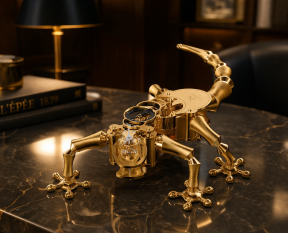
Table clock

Rotating ring for adjusting the dial depending on the chosen orientation
Manual winding using the tail by shifting it from side to side
Technical Specifications
The Gekko by L’Epée 1839 is a limited edition of 99 pieces, available in three finishes: Full Gold-Plated, Black & Silver, and Champagne.
Display
Hours and minutes: round openworked skeleton dial with two hands indicating the hours and minutes.
Main structure
Dimensions: 66 mm high, 290 mm long, 180 mm wide,
Weight: 1.4 kg
Movement
L’Epée 1839 in-house movement
Balance frequency: 18,000 bph / 2.5Hz
Power reserve: 8 days
Jewels: 11
Number of components: 220 pieces
Incabloc shock protection system
Finishing: polished and sand-blasted plates, polished gears
Manual-winding using the tail by shifting The Gekko’s tail from side to side
Setting the time on the back of the clock, using a dedicated winding key
Rotating dial adjustable using a dedicated tool.
11 possible display positions: 10 vertical orientations when wall-mounted, and 1 horizontal position when placed on a flat surface (table, desk…).
Materials & Finishing
Stainless steel, brass, and lacquered elements
Satin-finished and polished legs and tail
Special lacquering technique
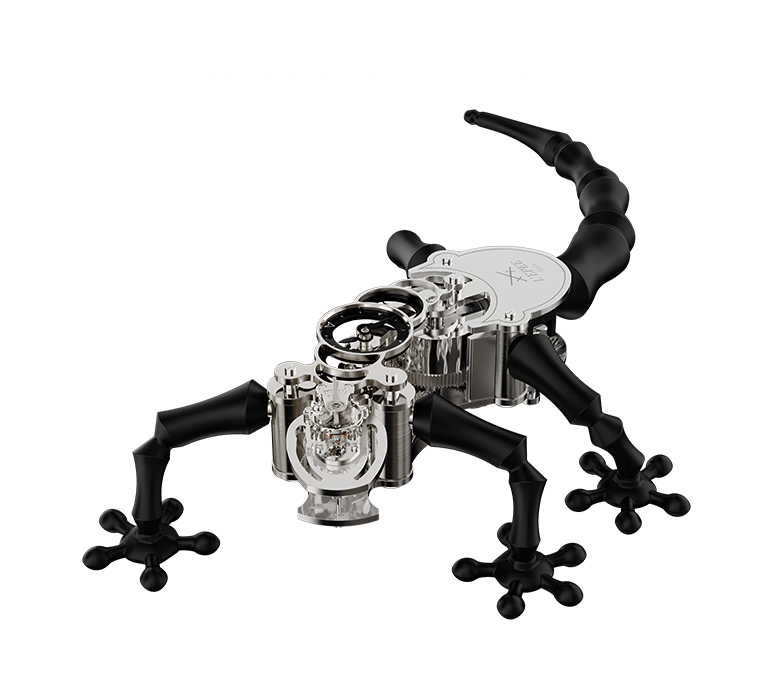
Reference
Black & Silver
Limited edition of 99 pieces
AVAILABLE Add to cart 
18'500 CHF / excl. VAT
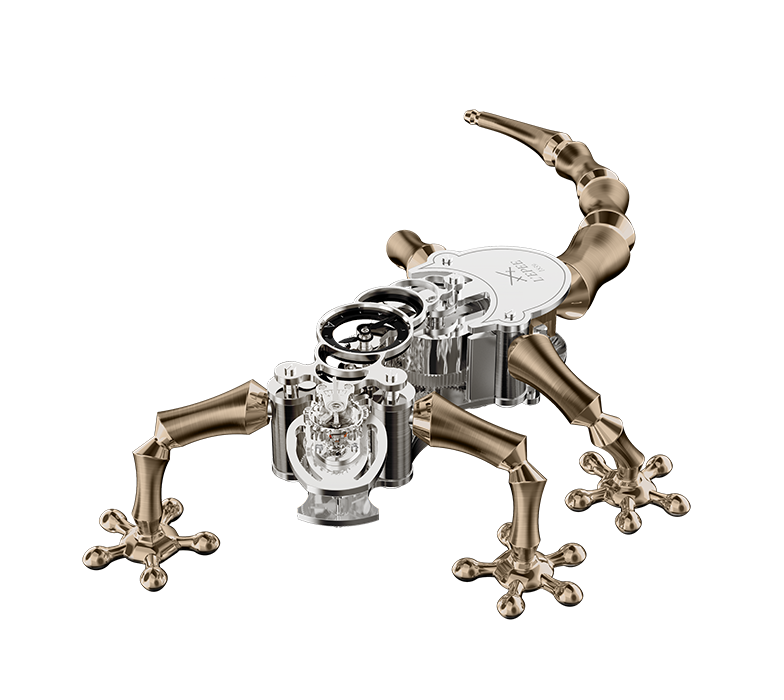
Reference
Champagne
Limited edition of 99 pieces
AVAILABLE Add to cart
18'500 CHF / excl. VAT
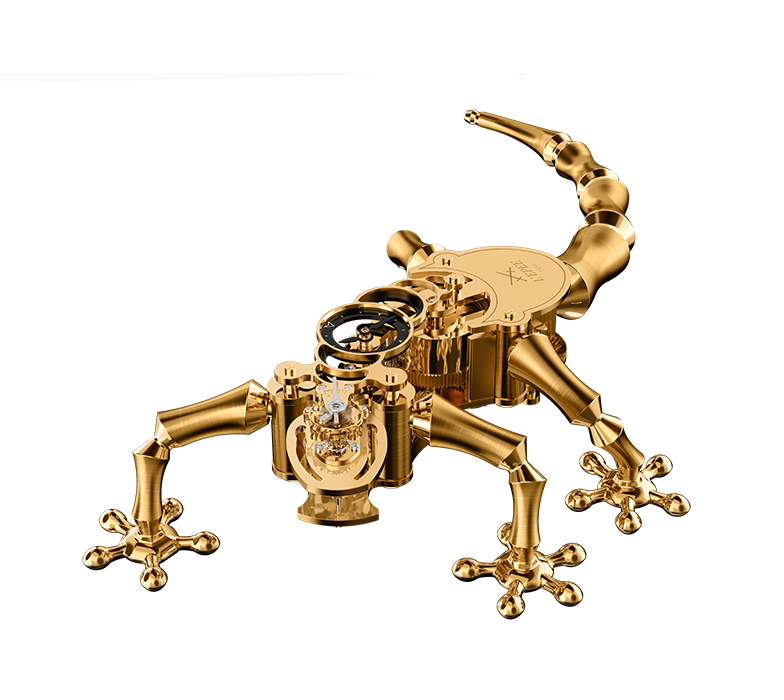
Reference
Full gold-plated
Limited edition of 99 pieces
AVAILABLE Add to cart
18'500 CHF / excl. VAT
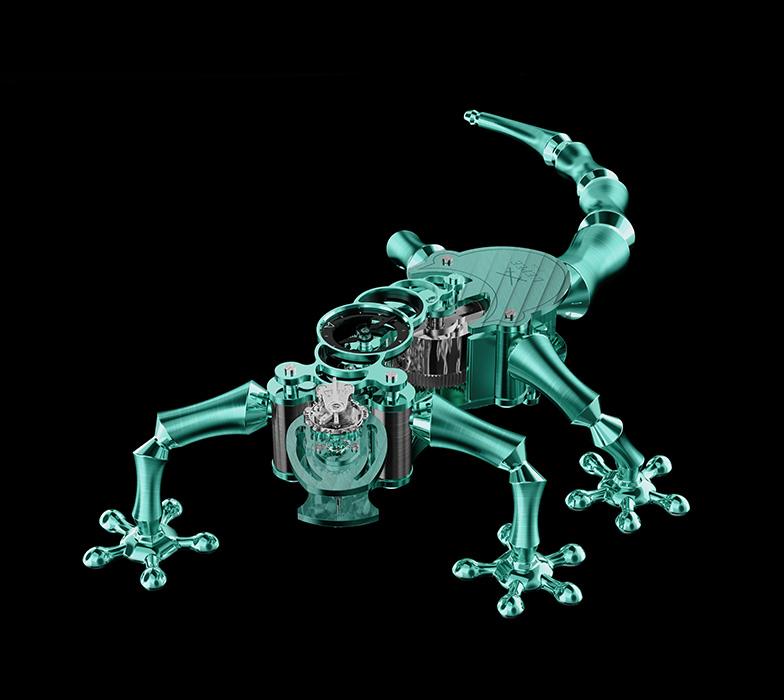
Reference
Turquoise and Côtes de Genève finishing
AVAILABLE Add to cart
18'500 CHF / excl. VAT

Reference
Blue and Côtes de Genève finishing
AVAILABLE Add to cart
18'500 CHF / excl. VAT